What Is BESS Site Layout?
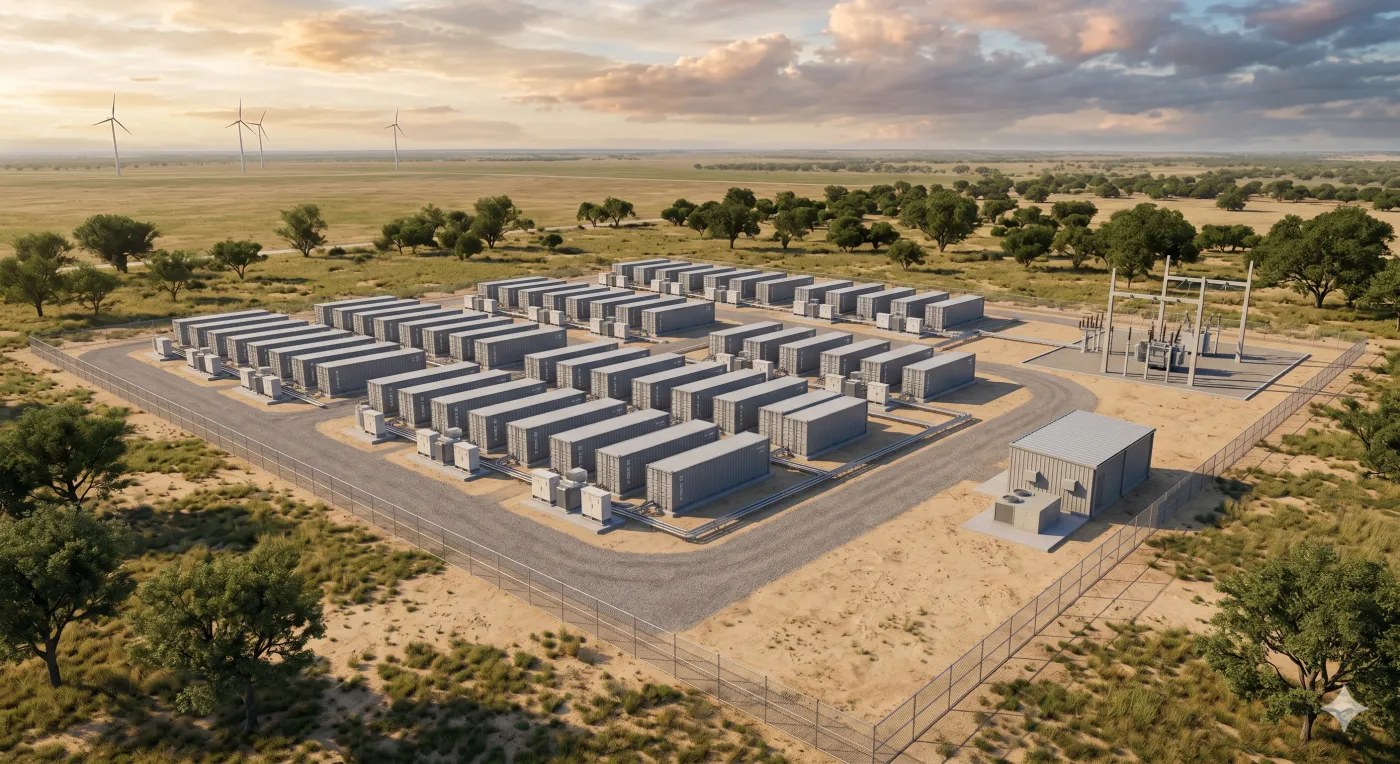
BESS site layout is the engineering process that determines how every piece of equipment, infrastructure, and access route on a battery energy storage site is positioned in relation to the others. It defines the site energy density, maintainability, augmentation flexibility, fire containment, and cabling efficiency for the life of the asset.
Why Site Layout Is Difficult
Every category in a site layout constrains every other. Placing the PCS closer to the DC blocks for cabling efficiency may fail fire-spacing requirements. Widening DC block separation for fire safety cuts total installed capacity. The technical building needs to be sized to fit all the equipment required inside it — control systems, fire panels, and auxiliary equipment — which affects the site footprint.
The inputs are not fixed. A site layout evolves as the project moves through its development stages. DC block products are released with higher energy density. Fire safety guidelines are updated. Market mechanisms shift, moving the financial business case from two-hour to four-hour or higher duration storage. From origination to commercial operation date, the inputs that define the layout continue to change.
The Scope of Site Layout
Permitting and Regulatory Clearances
Building permits set distances to neighboring buildings, occupied structures, and property boundaries. Fire safety setback distances vary by jurisdiction. Municipalities may impose noise limits, visual impact restrictions, and environmental compliance triggers that affect equipment positioning.
Fire Safety and Containment
Separation distances between DC blocks determine whether a fire incident at one block is contained or spreads to others. The reference standards are NFPA 855 for installation requirements and UL 9540A for evaluating thermal runaway fire propagation. Local fire authorities often impose additional distances on top of these.
Other fire-system decisions are layout-driven: fire alarm control panel placement, dry pipe connector access, firewater containment, lightning protection, and fluid containment drainage.
Electrical Infrastructure Layout
Electrical infrastructure is positioned around the Point of Interconnection (POI), which may sit on-site or at an external substation. The HV substation, MV transformers, switchgear, and PCS must all connect to the POI through a cabling design that affects CAPEX, balance of plant scope, and fault management.
DC Block Stacking and Augmentation
DC blocks are stacked side by side or in multi-block configurations. The stacking arrangement is limited by fire safety and maintenance clearances set by the local municipality, insurance providers, and the equipment manufacturer.
Available land area and stacking requirements define the achievable site energy density. Both must be balanced against access roads for maintenance and fire emergency vehicle access.
Augmentation design evaluates how new energy capacity can be added to the site during its lifetime — whether through additional DC blocks or replacement of existing ones. Space for future capacity needs to be reserved at the initial design stage.
Civil Works and Foundations
Site grading determines surface water flow, equipment leveling, and foundation feasibility. Sites with significant height differences may need cut-and-fill, retaining walls, or staged platforms. Flood risk and extreme weather affect equipment elevation and drainage design.
Service and Maintenance Clearance
Each piece of equipment has clearance requirements specified by the equipment manufacturer. Doors need to open. Cabinets need to be accessed from the right side. Replacement parts need to be moved in and out. Lifting clearance for crane access during commissioning, maintenance, and replacement affects zone spacing and access road positioning.
Technical Buildings and Auxiliary Equipment
Most BESS sites need a technical building. It houses control and SCADA equipment, the power plant controller, fire safety control panels, human machine interface equipment (HMI), and in some cases the auxiliary power transformer. On larger sites, some of this equipment is placed in dedicated buildings rather than consolidated into one.
Site Security and Access
Fencing distance to equipment is set by fire separation rules and security requirements. Access road type matters: a drive-through layout accommodates heavy transport and emergency vehicles without requiring turnaround. Road specifications need to support the heaviest expected delivery and emergency vehicle access.
Designing as a System
A change to fire separation distances reshapes the stacking arrangement, which changes the cabling design, which affects the civil works footprint. No single category can be resolved without evaluating its effect on the others.
Try it yourselfDesign your BESS site layoutPlace DC blocks, set safety distances, and export your layout — free, no account required.Open the layout tool →